

8700
Salads Served
40,010
Gallons of Water Saved
657
Plastic Produce Bags Avoided
Healthy Salad Meals is a student-led farm-to-cafeteria program. Students grow lettuce on school-site hydroponic towers, harvest and prepare it, and serve free salads through the school cafeteria. Along the way, they learn what it takes to make a small food system actually work.
Timeline: Idea to Thousands Served
2024
.png)
Idea Begins
After researching food insecurity in AP Environmental Science, Jackson begins designing a way to grow fresh food directly on the Dos Pueblos campus.
2024-25
.png)
8 Months of Building
Students clear the site, level the ground, lay pavers, install hydroponic towers, run electricity, and work through school and food-safety approvals.
January 2025
.png)
1st Salads Served
The first school-grown lettuce travels about ten feet from the hydroponic towers into the cafeteria kitchen and onto students’ lunch trays.
2025-2026
.png)
100 Salads a Week
Tuesday and Thursday harvests become part of the school week. Students grow, harvest, wash, prepare, and serve roughly 100 free salads each week.
May 2026
.png)
7600+ Salads Served
Healthy Salad Meals receives outside recognition and begins developing a model other schools can replicate.
September 2026
.png)
Expanding > La Cumbre
Helped launch a new tower-growing program at La Cumbre Junior High, working with students and local partners to begin adapting the model for a second campus.
Who Gets to Eat Well?
For years, I raised money for our local food bank. Canned food was relatively easy to collect. Fresh food was harder. That bothered me. Fruits and vegetables are some of the foods we are constantly told to eat more of, but they are also some of the hardest foods to get to people while they are still fresh.
Freshman year, while working on a school project about food insecurity, I visited Pilgrim Terrace, a retirement community near my school. They were growing lettuce in hydroponic towers. I remember looking at them and thinking: Why couldn’t we do this at school?
At Dos Pueblos, the lettuce now grows about ten feet from the cafeteria. But those ten feet turned out to be the hard part. We had to figure out approvals, food safety, harvesting, washing, refrigeration, student schedules, cafeteria coordination, seedlings, maintenance, and who would take over next.
Healthy Salad Meals started with a simple goal: grow fresh food at school and give it to students for lunch. It became something more interesting. Could students build a small food system inside a public school, make it work, and then leave behind a system that another group of students could run?

School Food Systems
Healthy Salad Meals began with an unused patch of ground beside the Dos Pueblos High School cafeteria. Today, nine hydroponic towers help produce approximately 100 free salads each week. Our policy brief, Ten Feet from Tower to Tray, and accompanying case study document the approvals, partnerships, food-safety procedures, funding, and daily operations behind the program, offering a model other schools can adapt.
Community Food Access
Between July and August 2026, Jackson Simmons-Furlati collected 102 surveys at food-distribution sites in Goleta and Santa Barbara. Eighty-four respondents requested later pickup hours, while 73 reported uncertainty about where to find food resources. Written responses described food that spoiled too quickly, limited choices, and difficulty preparing what was provided.
When Food Is Available but Hard to Use presents these findings, acknowledges the study's limitations, and proposes changes local food providers could investigate.
Published Op-Ed | Ten Feet
Why does school food travel hundreds of miles when some of it could be grown just outside the cafeteria? Drawing on his experience building Healthy Salad Meals, Jackson examines the costs of transporting and storing school food and argues that federal policy should help schools establish small, on-site growing systems. His proposal calls for expanding the Plant-Based Meals in Schools Act to support growing food where students eat it.
Founder Research & Writing
2026 John Locke Institute Global Essay Prize | High Commendation, Public Policy In How Much Is the Value of the Future?, Jackson examines how governments use discount rates to assign monetary value to future consequences, particularly when environmental damage may be irreversible. The essay asks what today's decision-makers owe people who will inherit the consequences.


Jackson
I’m Jackson, the founder and student director of Healthy Salad Meals. I started the program at Dos Pueblos High School after wondering why schools couldn’t grow some of the fresh food they served themselves. What began with a few hydroponic towers now produces about 100 salads a week. I work with students, cafeteria staff, teachers, and community partners to keep the program running and help bring it to other local schools.

Kieran
I’m Kieran, I'm a senior here at Dos Pueblos and I’m a motivated student with a strong interest in aerospace engineering and the science behind flight and space exploration. I’ve always been curious about how aircraft and spacecraft are designed, built, and tested, and I enjoy learning how math and physics are applied to solve real engineering problems. Through my academic work and extracurricular involvement, I’m working to build a solid foundation in engineering principles, teamwork, and critical thinking. I’m eager to continue developing my skills, gain hands-on experience, and learn from others who share a passion for aerospace and innovation.

Lucas
Hey, my name is Lucas Neushul, and I’m a senior at Dos Pueblos High School. I’m a varsity water polo player at DPHS, have a strong interest in mechanical engineering, and enjoy working on hands-on projects that allow me to solve real-world problems. This is my third year being part of Healthy Salad Meals, where I’ve gained hands-on experience maintaining hydroponic towers, managing water chemistry, harvesting lettuce, and preparing fresh salads for our school. Through this program, I’ve learned more about sustainable agriculture and the science and engineering behind hydroponic farming. I especially enjoy seeing how engineering and sustainability can work together to make a positive impact on our school and the surrounding community.

Emillio
Bio coming soon!

Brandon
My name is Brandon Ceballos, and I’m in ninth grade. I’m part of Healthy Salad Meals, where I help with the process of growing and preparing fresh food for students. I got involved because I wanted to try something new and learn more about where the food we eat comes from. One thing I’ve learned from HSM is that getting fresh food from a garden to the cafeteria takes more work than I expected.

Maddox
Maddox Schapiro is a junior at Dos Pueblos High School in Santa Barbara, California. He is an active and outgoing student who enjoys staying busy, spending time with friends, and being involved in a variety of clubs and sports. Maddox plays lacrosse and also enjoys golfing and spending time at the beach. Outside of school and sports, Maddox loves traveling and making memories with his family. He enjoys exploring new places, experiencing new things, and spending time with the people who are important to him. Maddox is a friendly, hardworking, and curious young man who is beginning to explore his interests and think about his future beyond high school.

Teague
Hey, I'm Teague Learmonth, a 9th grader at Dos Pueblos High School. I'm a swimmer and I also volunteer at the Sea Center. Outside of that, I love playing guitar, and I'm into English, history, and adventuring. I like this program because it brings the community healthy food, raises awareness, and it's a hands on activity that is fun and easy to do. I get to actually do the work, not just hear about it.
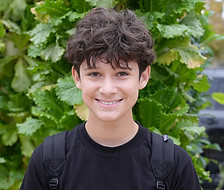
Jayce
My name is Jayce, and I am a 9th-grade student. I am part of Healthy Salad Meals, where I help with preparing and packing fresh salads for students. I got involved because I wanted to try something new and learn more about how food gets from growing to the cafeteria. One thing I have learned is how much work goes into preparing fresh food for students. Outside of Healthy Salad Meals, I enjoy playing soccer.
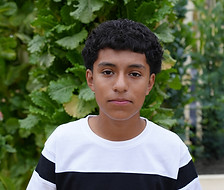
Tony
My name is Tony, and I am a 9th-grade student. I am involved with Healthy Salad Meals, where I help prepare fresh food and keep things organized. I joined because I wanted to learn how food is grown and prepared for students. My favorite part is getting to work with others and seeing the final salads ready for the cafeteria. Outside of HSM, I enjoy playing sports and spending time with my friends.
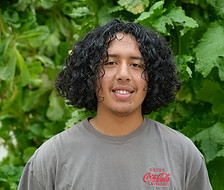
Jordan
My name is Jordan, and I’m a senior currently attending Dos Pueblos High School. I’ve assisted with harvesting lettuce, refilling the towers with nutrients and water, cleaning the towers, and packing salads. But my favorite task would be packing up all the salads and getting to see the final product. I’ve always been intrigued by agriculture, and through Healthy Salad Meals I was not only able to fulfill this interest; I could help the community while doing so.

Jason
I’m a ninth grader who enjoys working with my friends and learning more about health and nutrition. I like being part of Healthy Salad Meals because I get to watch the food grow and help take care of the towers. I also want to help expand the program so more students and schools can be part of it.

Nick
Bio coming soon!
3-Step Impact Loop
1
We Grow
School-site hydroponic towers produce fresh romaine with ~90% less water and minimal single-use plastic. Students run seeding → transplant → harvest, logging pH/EC, yield, and cost per head so every salad is traceable and safe.
What it means: local food, real skills, clean data.
2
We Partner
Local restaurants add a “Peace Salad” to the menu and contribute $10 per salad. Sponsors can fund a tower at a school and receive quarterly impact reports (salads funded, water saved, plastic avoided, CO₂e reduced).
What it means: dollars flow directly into production—no middlemen.
3
We Serve
Those dollars become free salads for students, teachers and faculty at Dos Pueblos High School —about 100 each week. A local funding loop that helps sustain the program.
What it means: hyperlocal production → direct funding → community benefit.
Join Us

Restaurant
Put a Peace Salad on your menu and contribute $10 per sale: 1 Peace Salad funds 5+ free Healthy Salad Meals.
What you do
-
Feature the Peace Salad (we provide menu copy + pricing guidance).
-
Share a short blurb at the table/online with a QR to our live impact dashboard.
What you get
-
Quarterly impact report (salads funded, water/plastic/CO₂e saved).
-
Co-marketing kit: table tents, window decal, social assets, press blurbs.

Student
Grow food. Run ops. Lead a team.
Join the lettuce team to seed, transplant, harvest prep and track.
What you get
-
Hydroponic growing and nutrient management
-
Food-safety and sanitation procedures
-
Harvest and yield tracking
-
Team scheduling and operations
-
Community food-system management

Want a Salad Program?
We can help you help you design a program that fits your school community.
We provide
-
Tower specs, SOPs (food safety & sanitation), and training.
-
A ready-to-use impact dashboard + quarterly reports.
Funding options
-
We help you write grants, connect you with potential restaurant partners, give guidance on approaching your school board and parent programs.


AWARDS & RECOGNITION


We Advance UN Sustainable Development Goals

What we do: Provide reliable access to fresh, nutritious salads for students and families.

What we do: Give away fresh, fiber-rich meals; teach food safety and hygiene.

What we do: Hydroponics recirculate water, using ~90% less than conventional fields.

What we do: Run pumps on solar either tapping into campus power or installing.

What we do: Deploy small-footprint, sensor-enabled towers; standardize SOPs

What we do: Hyperlocal supply shortens the chain and builds community capacity.

What we do: Plastic-free salads on campus; reduce spoilage with harvest-to-service timing.

What we do: Cut transport, packaging, and grid energy; report CO₂e per salad

What we do: Eliminate single-use on our campus as plastics often become marine debris,

What we do: The Peace Salad model connects restaurants, schools, and students.